
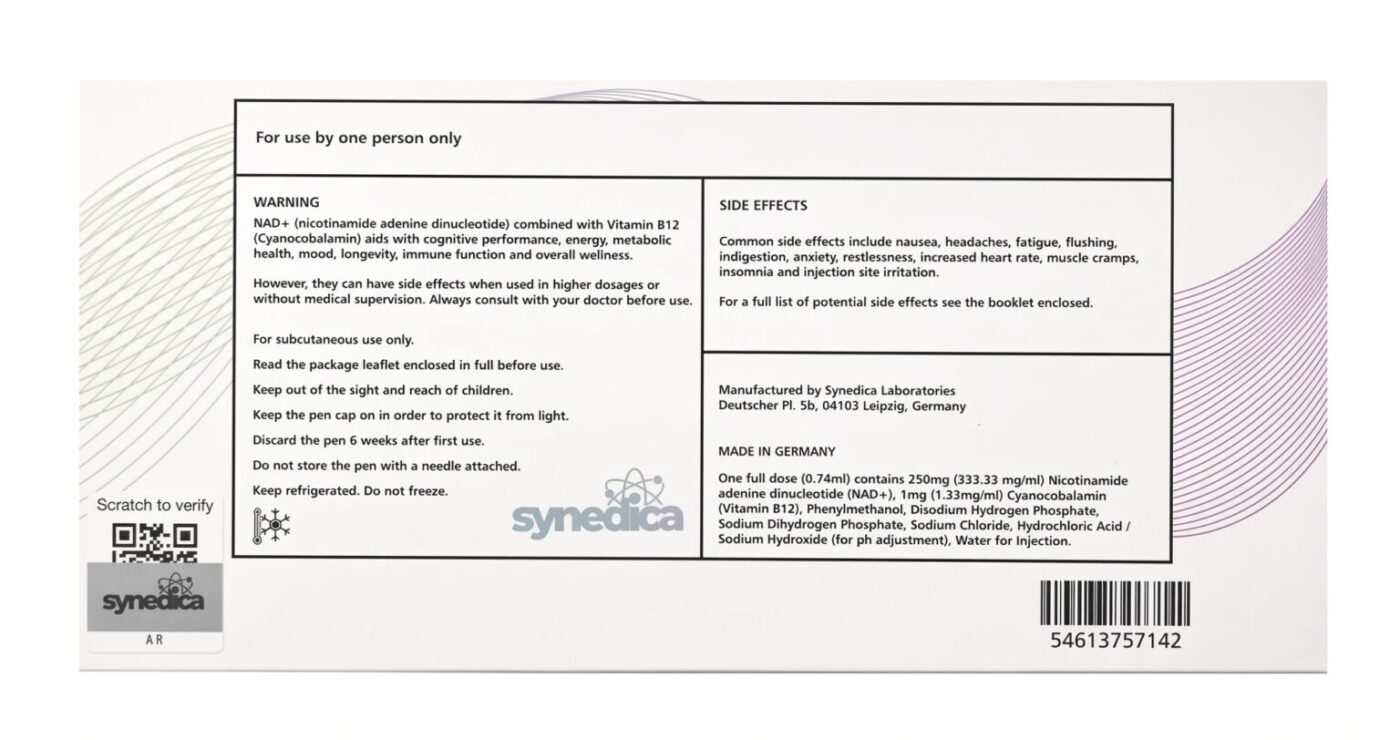
Introduction: Can You Trust Synedica Customer Reviews?
Before trusting a business or an online product listing, many people search for Synedica customer reviews. Reviews can help you understand what other people say about a website, its communication, its policies and their reported experiences.
However, not all online feedback provides the same level of evidence. A review may describe a genuine customer-service experience, repeat a marketing claim or offer an opinion that cannot be independently verified.
This matters when reviews concern pharmaceutical products or substances promoted for weight management. A positive testimonial does not prove that a product is authentic, safe, effective or legally authorised.
This Synedica customer review guide explains how to assess feedback, compare sources, investigate potential warning signs and decide which claims require further verification.
Why People Search for Synedica Reviews
People searching for Synedica may have different questions. Some want to identify the business behind a website. Others want to understand product descriptions, examine customer feedback or check claims about quality and authenticity.
These different needs should not be confused.
A review about customer service may provide information about communication. A review about shipping may describe a delivery experience. Neither establishes the composition or medical safety of a product.
Similarly, a testimonial about a claimed health outcome does not replace controlled clinical research.
A useful review should explain what the available evidence can support and where uncertainty remains.
10 Ways to Evaluate Synedica Customer Reviews
1. Check where the review was published
Determine whether the feedback appears on an independent review platform, a public discussion forum or the seller’s own website.
Reviews published by the business itself may be selected or moderated by that business. Independent platforms may provide additional context, but they are not automatically free from manipulation.
Consider the source and its review policies before drawing a conclusion.
2. Look for specific, relevant details
A review describing a particular customer-service interaction may be more useful than a generic statement such as “excellent product.”
Specificity makes a claim easier to investigate, although detailed writing alone does not prove authenticity.
Look for clear descriptions of what happened rather than unsupported claims of extraordinary results.
3. Compare feedback across sources
Search for independent information about the exact website, not just the Synedica name.
Different domains may belong to different businesses, and similarly named websites should not automatically be treated as connected.
Compare the details carefully and record which website each review concerns.
4. Watch for repeated wording
If several reviews use nearly identical phrases, that may justify closer investigation.
However, repeated wording alone does not conclusively prove that reviews are fake. People can independently use similar language, and review platforms may display standard prompts.
Look at the wider context instead of making an accusation based on one pattern.
5. Check the timing of reviews
A sudden increase in positive or negative feedback may be worth examining, particularly if the reviews provide little context.
There may be legitimate reasons for a sudden change, such as a promotion or service disruption. Timing is a clue to investigate, not proof of misconduct.
6. Distinguish customer service from product claims
A customer might say that a business replied quickly or that a parcel arrived as expected. These observations do not prove what a product contains or whether it is medically safe.
When reviewing Synedica feedback, separate service-related experiences from claims about pharmaceutical quality, purity or effectiveness.
7. Be cautious with guaranteed outcomes
Claims of guaranteed weight loss, immediate results or no possible side effects should be treated carefully.
Individual testimonials cannot establish that a treatment will work for everyone. Medical claims require appropriate scientific evidence and regulatory oversight.
8. Look for transparent disclosures
If a reviewer received payment, a free item or another benefit for publishing a review, that relationship may affect how the feedback should be interpreted.
Review websites should also disclose relevant affiliate relationships or commercial connections.
9. Check whether the claims can be independently verified
A reviewer may refer to an order, a document or a specific interaction. Where appropriate and available, look for independent corroboration.
Do not request or publish another person’s private information. The goal is to evaluate the reliability of the claim while respecting privacy.
10. Look at negative feedback fairly
Negative reviews can identify possible issues, but they also need context.
A complaint may be accurate, mistaken or incomplete. Look for supporting evidence and any documented response from the business before reaching a conclusion.
A fair review considers both positive and negative information without presenting unverified allegations as established facts.
Synedica Reviews and Product Authenticity
One of the most important questions is whether a customer review can establish that a product is genuine.
The answer is no—not by itself.
Customer feedback is based on personal experience and observation. A person generally cannot establish a product’s chemical composition, sterility or manufacturing quality simply by looking at the packaging or reporting an experience.
Likewise, a positive review cannot prove that a medicine has received regulatory authorisation.
For products advertised as retatrutide, these distinctions are especially important. The UK Medicines and Healthcare products Regulatory Agency (MHRA) stated in July 2026 that retatrutide had not been authorised for use in the UK and warned consumers about unregulated online products. See the MHRA’s official guidance.
Clinical research findings should not be treated as proof that a particular product sold online has the same contents, quality or effects.
How to Write a Responsible Synedica Review
If you operate a review website, transparency should be central to your editorial process.
State what you actually checked
If you reviewed the website’s contact page, say so. If you examined a published policy, identify it. Do not claim to have independently tested a product or contacted a company unless that actually happened.
Separate facts from opinions
A statement such as “the website lists a refund policy” is different from “the business always honours refunds.”
The first can be verified by checking the page. The second requires much stronger evidence.
Date your findings
Website policies and regulatory information can change. Include a publication or review date and update articles when important facts change.
Disclose commercial relationships
If your website earns commission through affiliate links or receives compensation, explain that relationship clearly. Readers should be able to understand whether a commercial interest may influence the review.
Avoid fabricated testimonials
Do not create fictional customer experiences and present them as real. If you use a hypothetical example to explain a review pattern, label it clearly as hypothetical.
What Should You Do If Synedica Reviews Conflict?
Different reviews can disagree because people have different experiences, sources may cover different websites, or the information may be incomplete.
When reviews conflict, consider these steps:
- Identify the exact website or business being reviewed.
- Check the dates of the reviews.
- Separate factual claims from personal opinions.
- Look for independent evidence supporting specific allegations.
- Check whether the business has provided a documented response.
- Avoid drawing a definitive conclusion when important information is missing.
This approach helps prevent an isolated positive or negative review from becoming the sole basis for a decision.
Frequently Asked Questions About Synedica Customer Reviews
Are Synedica customer reviews genuine?
That depends on the individual review and the source. Without independent evidence, it is not appropriate to declare a review genuine or fake simply because it is positive, negative or detailed.
Is Synedica legit based on its reviews?
Reviews alone cannot establish business legitimacy. Check the exact website, business identity, documentation and relevant regulatory information.
Can customer reviews prove a product works?
No. Testimonials are not a substitute for appropriate clinical evidence.
Should I trust a website that has only positive reviews?
Not automatically. A lack of negative reviews does not prove a business is dishonest, but it also does not establish that the business or its products are reliable.
How can I report a misleading review?
Check the review platform’s reporting procedure and provide factual supporting information. Avoid making public accusations that cannot be substantiated.
Do Synedica Retatrutide reviews prove the product is safe?
No. Customer feedback cannot establish a product’s composition, sterility, clinical safety or regulatory status.
Final Verdict: Look Beyond Synedica Customer Ratings
Synedica customer reviews can provide useful context, but their value depends on the source, the specificity of the information and whether relevant claims can be independently verified.
Compare multiple sources, distinguish service experiences from medical claims and investigate inconsistencies fairly. Avoid treating star ratings or testimonials as proof of authenticity or clinical effectiveness.
For SynedicaReviews.com, a transparent review process—one that identifies its evidence and openly acknowledges uncertainty—can help readers understand the information available without misleading them.
